

Hosting family this weekend and your home still feels chaotic? Or maybe you cleaned all afternoon, yet the house somehow looks the same. Here is the hard truth: cleaning out of order pushes dust and germs right back onto surfaces you already disinfected. That mistake doubles your workload and wastes your weekend. Below, you will find the exact professional sequence used by deep cleaning services Ottawa homeowners rely on, plus a clear next step if you would rather hand off the job entirely.
TL;DR: The Fast Answer
- Correct order: Declutter, dust top to bottom, then vacuum, then mop (dry before wet, high before low).
- Dust first, vacuum second. Dusting knocks particles onto the floor, so vacuuming afterward picks them up.
- Kitchen before bathroom in most professional routines, since food-prep surfaces get priority disinfection, but both need separate cloths and products.
- A professional deep clean typically takes two to six hours per crew, depending on home size and condition.
- Skipping the sequence causes cross-contamination, which means you spread bacteria instead of removing it.
Table of Contents
- Why Does Cleaning Order Actually Matter?
- What Is the Correct Order of Cleaning a House?
- What Is the 5 5 5 Rule for Cleaning?
- Do You Dust or Vacuum First?
- Should I Clean the Bathroom or Kitchen First?
- House Cleaning Checklist Room by Room
- 7 Common Cleaning Mistakes That Waste Your Time
- How Long Does It Take to Deep Clean a House Professionally?
- DIY Cleaning vs. Professional Deep Cleaning: A Quick Comparison
- Frequently Asked Questions
- Key Takeaways
Why Does Cleaning Order Actually Matter?
Cleaning order matters because the wrong sequence spreads dirt instead of removing it. For example, mopping before dusting means you wipe dust straight into your clean floor. As a result, you end up redoing work you already finished.
Think about it like painting a fence. You would not paint the bottom boards first, then brush dust onto them while sanding the top. The same logic applies to your home. Therefore, professionals always follow a top-down, dry-to-wet system. This method respects gravity and chemistry, so every step builds on the last instead of undoing it.
Operations managers and small business owners running commercial spaces face this same issue, often at a larger scale. A single missed step in a cleaning crew's routine can mean reopening a store with streaky windows or a lingering odour. Consequently, a documented sequence protects both time and reputation.
What Is the Correct Order of Cleaning a House?
The correct order of cleaning a house is: declutter, dust from top to bottom, clean glass and mirrors, disinfect high-touch surfaces, vacuum, then mop. This sequence moves dirt downward and outward, so nothing gets redeposited on a surface you already finished.
Here is the step-by-step breakdown professional cleaners follow for an efficient home cleaning session:
- Declutter first. Clear counters, floors, and furniture. You cannot clean around clutter, so this step always comes first.
- Dust top to bottom. Start with ceiling fans and light fixtures, then move to shelves, then baseboards. Dust falls downward, so working high to low prevents re-dusting lower surfaces.
- Clean mirrors and glass. Do this after dusting so you are not wiping dust back onto a freshly cleaned mirror.
- Disinfect high-touch points. Light switches, doorknobs, remote controls, and handles need separate attention since they carry the most germs.
- Tackle the kitchen and bathroom. These rooms need wet cleaning and disinfectant, so save them until dry-dusting elsewhere is complete.
- Vacuum every room. Vacuuming after dusting picks up particles that settled on the floor.
- Mop last. Wet floors should always be the final step, so nothing new gets tracked across them before they dry.
This is the backbone of any professional house cleaning order, whether you are prepping for guests or running a scheduled deep cleaning appointment.
Quick Reference Checklist: Correct Order of Cleaning Process
- 1. Declutter and pick up items
- 2. Dust ceiling fans, shelves, and furniture
- 3. Wipe mirrors and windows
- 4. Disinfect doorknobs, switches, and handles
- 5. Clean kitchen counters and appliances
- 6. Scrub bathroom fixtures
- 7. Vacuum carpets and hard floors
- 8. Mop hard floors last
What Is the 5 5 5 Rule for Cleaning?
The 5 5 5 rule for cleaning asks you to spend five minutes clearing clutter, five minutes wiping surfaces, and five minutes tidying floors in each room. It is a quick-reset method, not a substitute for a full deep clean.
Many homeowners use this rule for daily upkeep between bigger cleaning sessions. For instance, before guests arrive unexpectedly, fifteen total minutes per room can make a huge visual difference. However, the 5 5 5 rule does not replace disinfection or a true top-to-bottom routine. Instead, think of it as damage control, while your weekly or monthly clean follows the full professional sequence.
If you are a small business owner managing a storefront or office, a version of this rule can work between scheduled commercial cleans. For deeper resets, though, a structured regular cleaning routine still matters more than quick fixes alone.
Do You Dust or Vacuum First?
You should always dust before you vacuum. Dusting releases particles into the air and onto the floor, so vacuuming afterward collects everything in one pass instead of two.
This is one of the most searched questions about home cleaning, and for good reason. Many people vacuum first out of habit, then dust shelves above the carpet. Unfortunately, that undoes the vacuuming completely. Therefore, always treat dusting as a dry, upper-level task that happens before anything touches the floor.
Use a microfibre cloth instead of a feather duster, since microfibre traps particles rather than scattering them. In addition, a slightly damp cloth works even better for shelves and blinds, as it prevents dust from becoming airborne in the first place.
Should I Clean the Bathroom or Kitchen First?
Most professional cleaners clean the kitchen before the bathroom, since food-contact surfaces carry a higher risk if left dirty longer. However, both rooms require separate cloths, sponges, and disinfectants to avoid cross-contamination between them.
Here is the professional reasoning. Kitchens involve food prep, so grease, crumbs, and bacteria build up quickly on counters and stovetops. Bathrooms, on the other hand, deal with different bacteria tied to moisture and waste. As a result, using the same cloth in both rooms spreads one problem into another space entirely.
A practical rule: color-code your cleaning cloths. For example, use blue for kitchen counters, yellow for bathroom fixtures, and a separate cloth entirely for toilets. This small habit prevents the exact cross-contamination that undoes an otherwise solid cleaning order.
House Cleaning Checklist Room by Room
A full house cleaning checklist room by room keeps you from missing steps, especially during a deep clean. Below is a practical breakdown by space.
Kitchen
- Clear counters and wipe down appliances
- Clean inside the microwave
- Disinfect handles on the fridge, oven, and cabinets
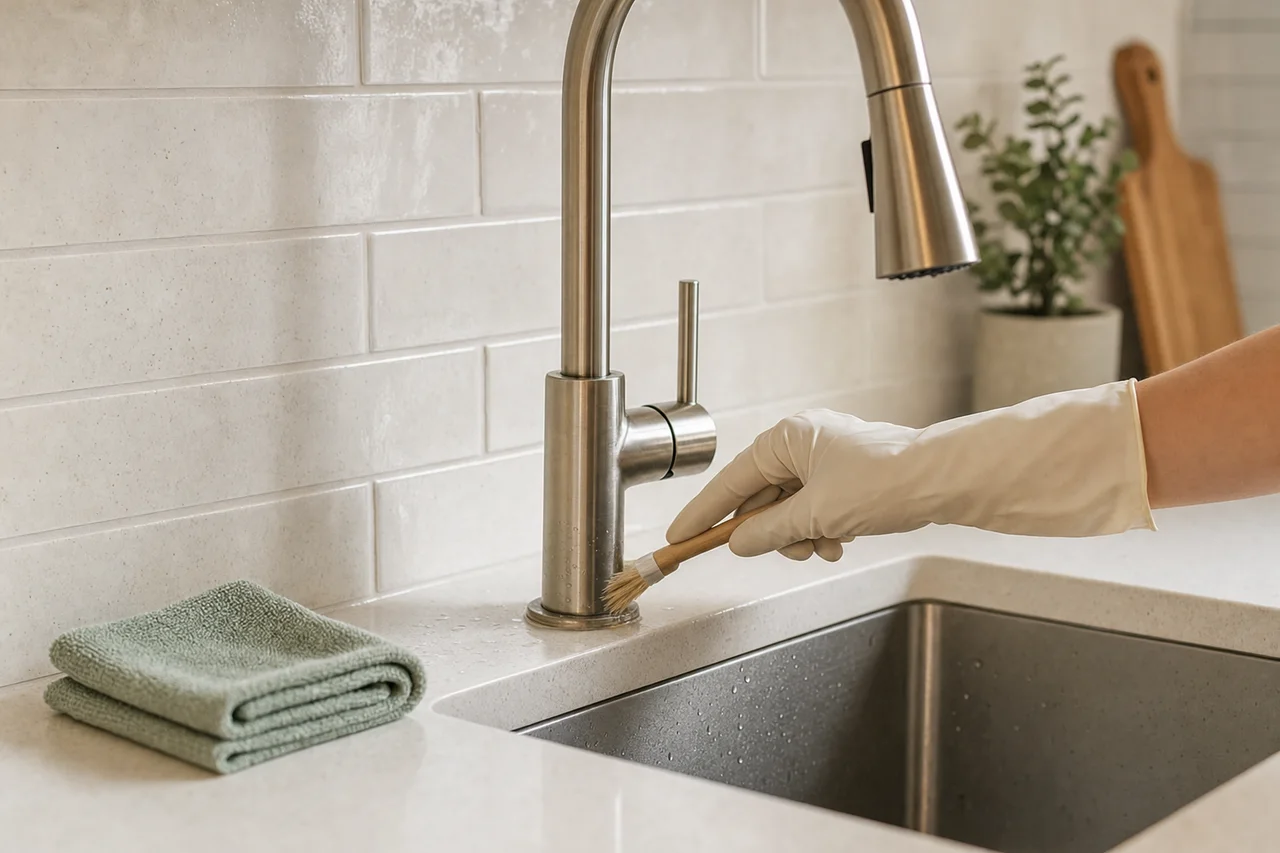
- Scrub the sink and faucet
- Sweep, then mop the floor last
Bathroom
- Spray tub and shower with cleaner, let it sit
- Scrub the toilet, inside and out
- Wipe the mirror and countertop
- Disinfect light switches and door handles
- Mop last, once everything else is dry-wiped
Living Room and Bedrooms
- Dust ceiling fans and light fixtures first
- Wipe down furniture and shelves
- Launder bedding on a regular schedule
- Vacuum carpets, rugs, and under furniture
For a more detailed, step-by-step approach to each space, our guide on creating a pristine clean home covers additional detail you can apply room by room.
7 Common Cleaning Mistakes That Waste Your Time
The seven most common cleaning mistakes are cleaning out of order, using one cloth everywhere, mopping before vacuuming, skipping high-touch points, ignoring ceiling fans, ineffective product use, and rushing bathrooms. Each mistake forces you to redo work later.
- Cleaning out of order. This is the root cause of most wasted effort, as covered above.
- Using one cloth for every surface. This spreads bacteria between the kitchen, bathroom, and other rooms.
- Mopping before vacuuming. Dry debris gets trapped in wet floors, creating streaks and grime.
- Skipping high-touch points. Doorknobs and light switches carry more daily contact than most surfaces.
- Ignoring ceiling fans and vents. Dust collects there first, then falls onto everything you already cleaned.
- Using the wrong product for the surface. Harsh chemicals on natural stone or wood can cause permanent damage.
- Rushing the bathroom. Disinfectant needs contact time to work; wiping it off too quickly reduces its effectiveness.
If you recognize a few of these in your own routine, you are not alone. Most households make at least two or three of these mistakes without realizing it. Fortunately, correcting the order solves most of them at once.
How Long Does It Take to Deep Clean a House Professionally?
A professional deep clean typically takes two to six hours, depending on home size, number of rooms, and current condition. Larger homes or those with heavy buildup may require a full day or a multi-person crew.
For context, a standard two-bedroom condo usually takes a two-person crew about two to three hours. A larger single-family home with three or more bathrooms can take four to six hours, especially if it has not had a deep clean in several months. Move-in and move-out cleans often take longer, since every cabinet, appliance interior, and baseboard needs attention.
If you are comparing timelines before booking, our move in move out cleaning page outlines what that specific service typically involves.
DIY Cleaning vs. Professional Deep Cleaning: A Quick Comparison
Many homeowners want to know whether a DIY weekend clean can match a professional deep clean. The table below breaks down the real differences.
| Factor | DIY Cleaning | Professional Deep Cleaning |
|---|---|---|
| Time required | Often spread across a full weekend | Typically two to six hours, done in one visit |
| Equipment | Standard household tools | Commercial-grade vacuums and disinfectants |
| Consistency | Varies by energy and schedule | Follows a documented, repeatable sequence |
| Hard-to-reach areas | Frequently skipped | Included as standard (baseboards, vents, behind appliances) |
| Best for | Weekly upkeep and the 5 5 5 rule | Move-in or move-out, post-renovation, or seasonal resets |
If your home needs more than a quick refresh, our benefits of hiring professional cleaners guide explains when it makes sense to bring in a crew instead of tackling it solo.
Frequently Asked Questions
What is the correct order of cleaning a house?
Declutter first, dust from top to bottom, clean glass, disinfect high-touch areas, then vacuum, and mop last. This order prevents dirt from moving back onto surfaces you already cleaned.
What is the 5 5 5 rule for cleaning?
It means spending five minutes decluttering, five minutes wiping surfaces, and five minutes on floors per room. It works well for quick resets, not full deep cleans.
Do you dust or vacuum first?
Always dust first. Dusting knocks particles onto the floor, so vacuuming afterward removes everything in a single pass.
Should I clean the bathroom or kitchen first?
Clean the kitchen first in most routines, since food-contact surfaces carry higher risk. Always use separate cloths for each room to avoid spreading bacteria.
How long does a professional deep clean take in Ottawa?
Most homes take between two and six hours, depending on size and condition. Larger homes or neglected spaces may need a full day.
Can I combine the 5 5 5 rule with a full deep clean schedule?
Yes. Use the 5 5 5 rule for daily or weekly upkeep, then schedule a full top-to-bottom deep clean monthly or seasonally for a complete reset.
Key Takeaways
- The correct order of cleaning a house is declutter, dust top to bottom, disinfect, vacuum, then mop.
- Always dust before vacuuming to avoid redistributing particles onto clean floors.
- Clean kitchens before bathrooms, but never share cloths between the two rooms.
- The 5 5 5 rule works for quick resets, not as a replacement for a true deep clean.
- Most of the seven common mistakes trace back to one root cause: cleaning out of sequence.
- A professional deep clean usually takes two to six hours, depending on home size.
Getting the sequence right saves you hours and protects the work you have already done. However, if your schedule does not allow for a full top-to-bottom clean this week, you do not have to do it alone. Check available appointments for deep cleaning services Ottawa homeowners trust, and let a trained crew handle the sequence for you from start to finish. You can also explore our full cleaning offerings to find the right fit for your home.
Leave a comment +
Leave a Reply
Your email address will not be published. Required fields are marked *