
Your carpet smells like your dog the moment the heat comes on. You have scrubbed, sprayed, and sprinkled baking soda, yet the smell keeps coming back. Now you are asking a fair question: can professional carpet cleaning remove old pet urine stains, or is this carpet beyond saving?
This guide walks through what actually happens to urine once it dries into carpet, how professionals approach old stains and smells, and what to ask before you book anyone. In addition, it covers when the problem may have moved past the carpet and into the subfloor.
TL;DR: Quick Answer
- Old pet urine stains and smells are harder to remove than fresh ones because urine can soak through the carpet into the padding and subfloor.
- Professional cleaners typically use a combination of inspection, enzyme or odour-neutralizing treatments, and hot water extraction (steam cleaning) rather than a single quick fix.
- Not every stain or smell can be fully removed from the carpet alone; sometimes the padding or subfloor needs separate treatment or replacement.
- Before hiring anyone, ask how they inspect for old stains, what treatment method they use, and whether they offer any written guarantee on odour removal.
Table of Contents
- Can professional carpet cleaning remove old pet urine stains?
- How can you tell if a pet stain is old or set in?
- Why does pet odour come back after carpet cleaning?
- Steam cleaning vs dry cleaning for pet stains: what is the difference?
- What is enzyme treatment and does it help with pet odour?
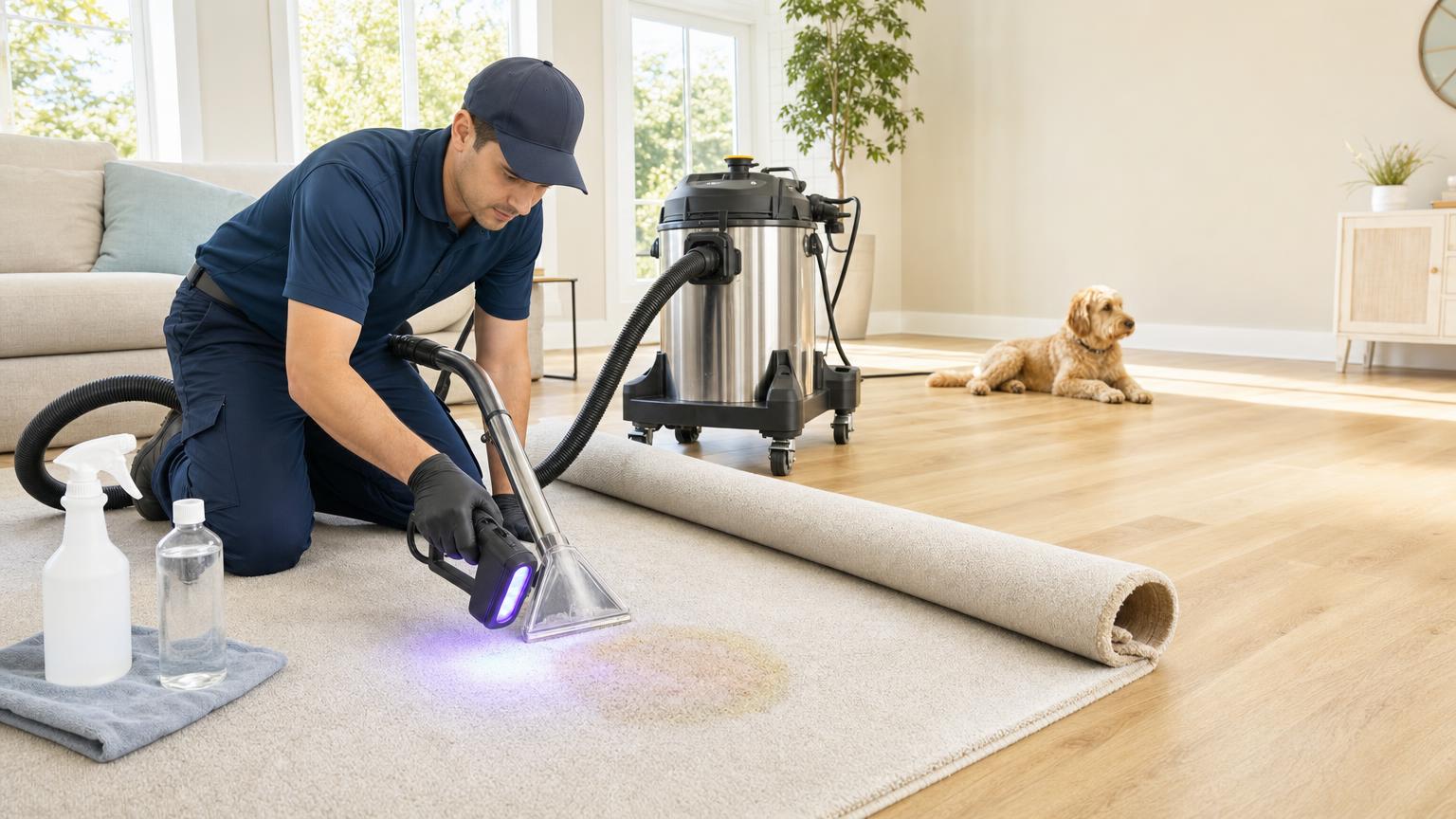
- What is UV light pet stain detection?
- Urine soaked into carpet padding or subfloor: what then?
- How to compare professional pet odour removal quotes
- How often should you clean carpet if you have pets?
- Practical Checklist: Questions to Ask Before You Book
- Frequently Asked Questions
- Key Takeaways
Can professional carpet cleaning remove old pet urine stains?
Professional carpet cleaning can often reduce or remove old pet urine stains and smells, but results depend on how deep the urine has soaked and how long it has sat. A fresh spill sitting only in the carpet fibres responds differently than urine that has dried for months and reached the backing or padding.
Therefore, the honest answer is: it depends on depth, not just age. A stain from six months ago that only touched the surface fibres may lift out fully. On the other hand, a stain from a few weeks ago that soaked straight through to the pad can be much harder to fully clear, because the smell source sits below the part a standard clean reaches.
This is why a proper inspection before treatment matters so much. A professional should check how far the stain has spread, not just look at the visible mark on top.
How can you tell if a pet stain is old or set in?
You can often tell a pet stain is old or set in by its colour, texture, and whether the smell gets stronger when the carpet is damp or warm. Discoloured, yellow-brown rings and a smell that intensifies with humidity usually point to a stain that has had time to dry and bond with the fibres.
Here are signs that suggest an old, set-in stain rather than a fresh one:
- Visible ring or halo: A darker edge around a lighter centre often means the liquid spread out and dried in layers.
- Smell gets worse in humid weather: Moisture reactivates dried urine crystals, so a stronger smell on damp days is a common clue.
- Stiff or crunchy texture: Fresh urine is wet; old, dried urine can leave fibres feeling slightly stiff once dry.
- Smell persists after surface cleaning: If blotting or a store-bought spray only masks the smell temporarily, the source may sit deeper than the surface.
If you are unsure, a professional technician can usually confirm the age and depth of a stain during an in-home inspection, before recommending a treatment plan.
Why does pet odour come back after carpet cleaning?
Pet odour often comes back after carpet cleaning because the urine crystals were not fully broken down or removed from the padding or subfloor, only masked on the surface. As humidity rises, those leftover crystals reactivate and release smell again, even though the carpet looked and smelled clean right after the appointment.
Consequently, a cleaning method that only treats the visible carpet fibres may offer short-term relief without solving the real issue. If urine has travelled down into the pad, simply shampooing or spot-cleaning the top layer will not reach it.
Another reason odour returns is incomplete drying. If a cleaned area stays damp for too long, this can encourage bacteria growth, which adds its own smell on top of any leftover urine residue. For a broader look at how drying time and humidity affect indoor smells in general, see our guide on commonly overlooked areas in a home.
Steam Cleaning vs Dry Cleaning for Pet Stains
Steam cleaning (also called hot water extraction) uses heated water and solution injected into the carpet, then extracted with suction. Dry cleaning methods use little to no water, relying instead on cleaning compounds or low-moisture foam that is worked into the carpet and vacuumed out.
Both approaches aim to lift dirt and residue out of carpet fibres, but they work differently when it comes to pet stains:
| Factor | Steam Cleaning (Hot Water Extraction) | Dry Cleaning (Low-Moisture) |
|---|---|---|
| How it works | Hot water and solution injected, then extracted with suction | Dry compound or low-moisture foam applied, then vacuumed |
| Drying time | Typically longer, since more moisture is used | Typically shorter, due to minimal moisture |
| Depth of reach | Can reach deeper into fibres and backing due to water penetration | Primarily targets surface-level fibres |
| Best suited for | Deeper-set stains and odours where more penetration is needed | Light surface soil or situations needing fast drying |
For old pet stains that have soaked in, a method with more penetration is generally more relevant, since the goal is reaching residue below the surface. However, the right choice also depends on the carpet type and manufacturer recommendations, so ask any professional which method they plan to use and why, based on your specific situation.
What Is Enzyme Treatment for Pet Odour, and Does It Help?
Enzyme treatment uses specially formulated cleaning solutions containing enzymes, which are natural proteins designed to break down the organic compounds in urine, such as uric acid crystals. Unlike a fragrance spray that only masks smell, enzyme solutions work to break apart the source of the odour itself.
In practical terms, here is how an enzyme treatment typically fits into a cleaning visit:
- The technician identifies the affected area, often confirming the full spread of the stain first.
- An enzyme solution is applied and given time (often an extended dwell time) to break down the organic residue.
- The area is then rinsed, extracted, and dried as part of the overall cleaning process.
Because enzymes need time to work, a rushed treatment with a short dwell time may not fully break down older, more concentrated residue. If you are booking a service specifically for pet odour, ask whether enzyme treatment is included and how long the solution is left to dwell before rinsing.
What Is UV Light Pet Stain Detection?
UV light pet stain detection uses a blacklight to reveal urine residue that is invisible under normal lighting. Dried urine often fluoresces under UV light, which helps technicians map the true size and location of a stain before deciding on a treatment plan.
This step matters because the visible stain on the surface is sometimes much smaller than the area actually affected underneath. As a result, a thorough inspection with UV light can prevent a cleaner from under-treating a stain that looks small but has actually spread wider through the backing.
If pet odour has been a recurring issue in your home, it is reasonable to ask a professional whether they use UV inspection as a standard step, rather than relying only on visible marks or smell alone.
Urine Soaked Into Carpet Padding or Subfloor: What Then?
When urine soaks through the carpet into the padding underneath, surface cleaning alone usually cannot fully resolve the smell. The padding acts like a sponge, holding onto moisture and odour-causing residue long after the top of the carpet looks dry and clean.
In cases where odour persists despite repeated cleaning, it may be worth asking a professional to check:
- Padding condition: Some sections of padding may need to be cut out and replaced rather than cleaned.
- Subfloor staining: If urine has reached the subfloor (the structural layer beneath the carpet and pad), this may require separate sealing or treatment work, which is typically outside standard carpet cleaning.
- Extent of the affected area: A small, isolated spot is a very different job than a large area with multiple layers affected.
Because subfloor repair falls outside typical carpet cleaning services, ask directly whether the company you are considering can identify subfloor issues, and whether they refer out to a flooring specialist for that part of the job if needed.
How to Compare Professional Pet Odour Removal Quotes
When you search for professional pet odour removal near you, you will likely get a range of quotes that look different on paper. Rather than comparing the bottom-line price alone, compare what each quote actually includes, since the cheapest option on paper may exclude steps that matter most for old, set-in stains.
Here is a simple way to compare offers on the same basis:
Quote Comparison Checklist
- Does the quote include an inspection step (visual and, ideally, UV light) before treatment begins?
- Is enzyme or odour-neutralizing treatment included, or is it an extra add-on cost?
- Which cleaning method is proposed: hot water extraction, low-moisture, or another process, and why for this specific stain?
- Is padding inspection or replacement discussed as a possible next step if the stain is deep?
- Is there any written guarantee or re-treatment policy if the odour returns within a set period?
- What is excluded from the quote, such as subfloor work or furniture moving?
Asking these same questions to every company you contact makes it much easier to compare like for like, instead of comparing a basic surface clean to a full inspection-and-treatment process.
How Often Should You Clean Carpet With Pets?
Homes with pets generally benefit from more frequent professional carpet cleaning than pet-free homes, since fur, dander, and accidents build up faster. Beyond professional visits, regular at-home maintenance between appointments also helps reduce how much residue has a chance to set in.
In between professional cleans, routine vacuuming plays a big role in managing pet hair and dander before it works into the carpet fibres. If vacuuming is a constant chore in your home, our guide to robot vacuums for pet hair looks at options for keeping on top of shedding between deeper cleans.
For a broader view of how carpet cleaning fits into an overall home maintenance routine, our carpet and upholstery cleaning service page outlines what a typical professional visit can cover.
Practical Checklist: Questions to Ask Before You Book
Before booking any pet odour removal service, it helps to walk through a short list of questions. This keeps the conversation focused on what matters for old, set-in stains rather than general cleaning.
Pet Stain and Odour Service: Pre-Booking Checklist
- How do you identify the full size of an old stain (visual check, UV light, or both)?
- What cleaning method do you recommend for this specific stain, and why?
- Is enzyme treatment included, and how long is the solution left to work before rinsing?
- What happens if the stain has reached the padding or subfloor?
- Do you offer any guarantee or follow-up visit if odour returns?
- What is specifically excluded from the price you have quoted me?
Walking through this checklist with each company you contact gives you a fair, side-by-side comparison, and helps you avoid surprises once the work begins.
Frequently Asked Questions
Will carpet cleaning remove set-in pet stains completely?
Professional cleaning can significantly reduce or remove many set-in stains, especially when paired with proper inspection and enzyme treatment. However, if urine has reached the padding or subfloor, full removal may require additional steps beyond standard carpet cleaning, such as padding replacement.
Does carpet cleaning for cat urine smell work the same way as for dog urine?
The general approach is similar: inspect, treat with an enzyme or odour-neutralizing solution, then extract. However, cat urine is often noted as having a stronger odour profile, so a technician may recommend a longer treatment dwell time or a more targeted enzyme product.
What does a pet stain removal guarantee usually cover?
This varies by company, so always ask directly rather than assuming. Some guarantees cover a follow-up visit if odour returns within a set time frame, while others may only guarantee the visible stain and not deeper padding issues. Get any guarantee terms in writing before you book.
How do I find professional pet odour removal near me that handles old stains specifically?
Ask directly whether a company has experience with old, set-in pet stains, not just general carpet cleaning. Request details on their inspection process, whether they use UV light detection, and what treatment method they recommend for deep or aged stains before you book.
Can pet urine damage the subfloor under my carpet?
If urine soaks through the carpet and padding repeatedly over time, it can potentially reach and affect the subfloor underneath. If odour persists despite thorough cleaning, it is worth asking a professional to check whether the subfloor needs separate attention from a flooring specialist.
Key Takeaways
- Old pet urine stains can often be reduced or removed by professional cleaning, but results depend on how deep the urine has soaked, not just how old the stain is.
- Check for signs like discoloured rings, stiffness, or smell that worsens in humid weather to spot a stain that may be set in.
- Odour returning after cleaning often points to residue left in the padding, so ask whether your cleaner inspects below the surface.
- Steam cleaning (hot water extraction) generally reaches deeper into carpet fibres than dry, low-moisture methods, which matters for old stains.
- Enzyme treatment breaks down organic urine residue rather than masking smell, but it needs proper dwell time to work.
- UV light detection helps technicians find the true size of a stain before treatment begins.
- If urine has reached the padding or subfloor, ask specifically how the company handles that, since it may fall outside standard carpet cleaning.
- Compare quotes using the same checklist of questions so you are comparing equivalent services, not just price.
If old pet stains and lingering odour have become a recurring frustration in your home, the next step is to get a clear, written assessment rather than guessing at another DIY fix. Request an inspection and quote from a professional carpet cleaning provider, and use the checklist above to compare your options before you decide.
Leave a comment +
Leave a Reply
Your email address will not be published. Required fields are marked *